
Ste kľúčovým stakeholdrom v oblasti chladenia a vykurovania z OZE alebo v oblasti rodovej rovnosti? Zapojte sa do interaktívnej aktivity, ktorej cieľom je pripraviť a prediskutovať akčné plány na podporu riešení chladenia a vykurovania z obnoviteľných zdrojov a zvýšenie zapojenia žien do tohto sektora.
Webinar #1: Overcoming the Invisible Barrier: Gender Dimensions of the RHC sector (Prekonávanie neviditeľnej bariéry: Rodová dimenzia v sektore chladenia a vykurovania)
Are you like us eager to make gender equality in the RHC sector happen? Good! The project Women4RenewableEnergy (W4RES) has what you need. Together with WECF, we have developed a capacity building program organised through a series of webinars. Five webinars will take participants along different steps towards women empowerment and gender equality in the Renewable Heating and cooling (RHC) sector.
Join our first webinar:
Overcoming the Invisible Barrier: Gender Dimensions of the RHC sector,
on the 31st of May, 10 am CET (held in English)
To establish a system with 100% renewable energies and decentralised structures, our energy system will need to change. New technologies, business models and societal transformation require flexibility and diversity to consider the perspective of several social groups. The participation and representation of women in the RHC sector are highly needed to fuel the energy transition. But which barriers prevent women from taking positions in the RHC sector? What tools and approaches exist to overcome these barriers? In this webinar, we are going to present several gender dimensions. Using the term gender dimensions we refer to specific ways, relations and areas by which gender and gendered roles are constructed. Furthermore, with an input presentation, small exercises and discussions, we want to point out several gendered barriers, e.g., carve out gender stereotypes that shape our perception and the way we walk through the world. As a solution, we show specific gender tools that tackle such barriers in the RHC sector.
Register in advance for this event: https://us06web.zoom.us/meeting/register/tZ0ocuihqzMpG9ExtkDofc4kXilqsTm9HuY8
Empower women to power up energy! We encourage everybody who is interested to join the webinar. There is no specific gender knowledge needed.
See you there!
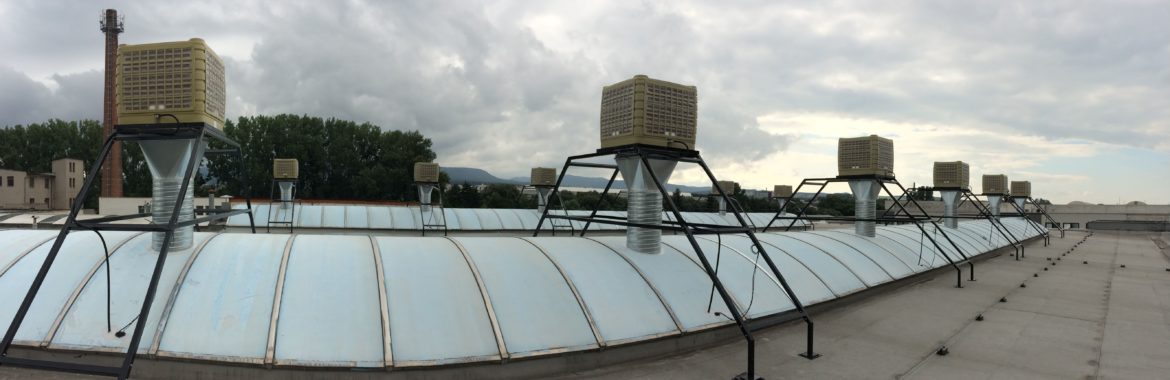
Najekologickejšie chladenie vďaka evaporácii alebo inak chladenie s využitím odparovacích chladiacich systémov
Predstavte si letné horúčavy s vonkajšou teplotou vzduchu 38 – 40°C. Teplota vzduchu v zle izolovanej budove môže vystúpiť až na 50°C. Pri takejto teplote sa pracovné podmienky stávajú pre zamestnancov nepríjemné a ich produktivita dramaticky klesá. Riešením je evaporácia, odparovanie, alebo inými slovami adiabatické chladenie – čoraz častejšie využívané popri klasickej klimatizácii, pričom obstarávacie náklady sú pomerne nízke.
O čo ide, ako to funguje a čo ponúka ADRIAN GROUP
Princípy adiabatického chladenia sa využívajú od nepamäti – voda ako prirodzený chladiaci prvok, či už v pasívnej (jazierka, nádrže, kanály, fontány) alebo v aktívnej podobe, zvlhčuje, odparovaním odoberá prebytočné teplo a teda chladí vzduch. Takým klasickým príkladom na pochopenie je samotný človek, ktorému je teplo – naša pokožka využíva odparovanie – produkuje pot, čím ochladzuje povrch a zároveň dochádza k odvádzaniu tepla. Adiabatické chladenie využívame pri športe, či v extrémnych situáciách napr. pri zvýšenej teplote ochladzujeme telo zábalmi.
Evaporácia, teda odparovanie, je najprirodzenejšou formou chladenia a zároveň aj tou najekologickejšou, t. j. s minimálnou záťažou pre prírodu. Priame zvlhčovanie čerstvého vzduchu je zároveň aj najúčinnejším spôsobom, ako pri minimálnych nákladoch získať maximálny chladiaci výkon. A to je jedným z pilierov biznisu ADRIAN GROUP.
ADRIAN GROUP inovuje a vyvíja energeticky efektívne vykurovacie/chladiace systémy s ohľadom na životné prostredie. Chladiče vzduchu, vyrábajú chlad maximálne efektívne, bez freónov, s minimálnou uhlíkovou stopou, pri nižších investičných a prevádzkových nákladoch, pričom dosahuje obrovské úspory elektrickej energie a, čo je podstatné, neničí našu planétu.
“Jednotka ADRIAN-AIR EV ponúka cenovo dostupné riešenie s extrémne nízkymi prevádzkovými nákladmi v podobe chladenia odparovaním. Tento systém môže slúžiť na vetranie, čistenie alebo dodatočné zvlhčovanie vzduchu v miestnosti”, hovorí Viktória Vranská, konateľka spoločnosti ADRIAN GROUP.
Využívajúc adiabatické chladenie dokáže ADRIAN GROUP vyrobiť z 1 kW elektriny až 25 kW chladiaceho výkonu. Výroba je 4 až 10-krát energeticky efektívnejšia v závislosti od reálnych parametrov odvodených od klimatických podmienok v danom okamihu. Zároveň pracuje s obrovskou masou čerstvého vzduchu, ktorý navyše prechádza filtráciou a dokáže znížiť svoju teplotu o 10 až 12 stupňov, ak je treba, za účelom získania maximálneho objemu chladu. Jednoducho povedané, veľký objem vzduchu, očistený a ochladený o 10°C, s minimálnymi prevádzkovými nákladmi je to, čo potrebujú prevádzky väčších rozmerov, pre ktoré klasická klimatizácia nemôže byť riešením. A každá odparovacia jednotka, ktorú zákazník uprednostní pred štandardnou klimatizáciou, je výhrou ako pre užívateľa, tak aj prírodu.
V rámci podporných služieb projektu W4RES sa v hľadáčiku ADRIAN GROUP ocitla internacionalizácia, t. j. hľadanie a prienik na nové trhy, a to či už prostredníctvom príležitosti, ktoré ponúkajú medzinárodné tendre (i cez tenderio platformu), či rôzne školenia. Predmetom podpory bola ich identifikácia a následné využitie v praxi. Zaujalo Vás to? Zistite viac ešte dnes!

Market potential and constraints in the CEE region
Intro
The Sustainable Europe Investment Plan, the investment pillar of the European Green Deal, aims to mobilize at least €1tn in additional private and public capital for renewable energy projects in the next decade[1]. The availability of a large-scale pipeline of investable projects is essential for the success of achieving climate and energy targets. However, public authorities, individuals, or businesses often lack the skills and capacity to set up, implement and finance ambitious sustainable energy projects[2]. The overall concept of the SEIFA project is to coordinate and support actions for establishing operational financial mechanisms and project aggregators for sustainable energy investments to industrial projects across the CEE region.
A stronger diversification of the financial sector in the CEE region
The CEE region economy is relying almost completely on a bank-based financial system, and it represents a limitation to growth. The capital stock in CEE is less than 50% of the EU average and the investment gap is particularly present in the private sector. In some CEE countries such as Slovakia, almost 75% of the overall investments comes from the public sector that cannot support the increasing need for funding. Consequently, a stronger diversification of the financial sector is necessary[3].
Four factors worsening the investment gap
The shortage of investments is unlikely to be sustainable in the long term without negative implication for growth. Several factors suggest the persistence of this gap in the future:
The capital endowment of CEE countries remains well below the EU average and the level of investments is still inferior to what was experienced in countries that have successfully graduated from medium to high income. Catching up will require a long period of higher investments.
Investments are still below the pre-crisis level in a number of CEE countries. It is yet unknown whether that is a permanent or temporary factor, but the crisis has led to an increase in risk premia and Western European countries being more careful.
The progress in reforms has slowed down or is even being reversed in many CEE countries.
The current geopolitical situation is amplifying these problems, making it even more necessary to achieve energy security and overcome the need for fossil fuels from foreign countries.
A combination of low profitability, low attractiveness of bank loans, and limited own resources have resulted in companies being largely unwilling to shift to renewable energy in their production processes. Integrating finance into climate and energy policy has become a central challenge for government not only in the CEE region but around the world.
The CEE region market potential
Renewable energies implementation in industrial processes is an area with large potential for improvements in the CEE region. The energy service companies may include implementing energy-efficiency projects together with renewable energy projects, in many cases on a turn-key basis. To fully develop the potential equity investments for energy service, companies need to improve their credit rating and help with commercial financing, allowing for larger-scale investments[4]. Strong local teams, with substantial capacity on the ground, have demonstrated that they can help an equity instrument to have a strong impact and to achieve its goals, especially in a long-term development perspective[5]. The SEIFA project, thus, makes a strong emphasis on building capacity for and supporting regional and national project aggregators as well as establishing new operational financial mechanism specifically for sustainable energy projects in the CEE region.
[1] RE NEWS. Retrieved at 01/08/2020 from: https://renews.biz/59539/investors-shell-out-19bn-on-new-european-wind/
[2] COM(2016) 860 final. ANNEX 1 Accelerating clean energy in buildings. Clean Energy For All Europeans
[3] Deutsche Borse Group. Trading venues. Retrieved at 1/08/2020 from: https://www.deutsche-boerse.com/dbg-en/regulation/regulatorydossiers/mifid-mifir/mifid-mifir-virtual/mifid-i-to-mifid-ii/market-structure/trading-venues
[4] European Investment Bank (2015). State of play – Financial Instruments in Croatia. ESIF fi-compass
[5] European Investment Bank (2018), Slovenia Overview. https://www.eib.org/attachments/efs/eibis_2018_slovenia_en.pdf

SEIFA is fostering the European energy security
Due to the current European security situation, the necessity for energy security is evident more than ever. Urgent efforts are needed to effectively replace Europe’s reliance on imported fossil fuels. Energy optimisation and transition to sustainable energy sources will help make Europe self-sufficient and energy independent. This is accomplished through increasing the use of sustainable energy sources, electric transportation, sustainable industrial thermal processes, bioenergy, biogas and hydrogen fuel in place of coal and petroleum, as well as by enhancing energy efficiency.
As noted by Richard Branson, countries will never go to war over renewables, sustainable energy will never interfere with conflict resolution. Furthermore, the sustainable energy transition would aid the globe in its efforts to achieve Net Zero emissions. Correspondingly, governments, businesses, and society are joining efforts to minimise or end their reliance on fossil fuels from adversary countries and accelerate the transition to sustainable energy in pursuit of energy security.
The SEIFA International Consortium coordinated by PEDAL has been accelerating the flow of investments toward the sustainable transition of industrial enterprises in line with the European Green Deal. Accordingly, the SEIFA project, co-funded by the European Commission, incentivises investments in sustainable energy, accelerates the achievement of climate objectives, and strengthens Europe’s energy security.
The Sustainable Energy Investment Fund (SEIF) being established during the project ensures the attainment of the project’s objectives. At PEDAL, we recognise the time for a global energy reset, with a special emphasis on Europe’s urgent need for clean and secure energy. Given the gravity of the situation, we will continue our engagement and efforts toward the SEIFA objectives to foster the transition and the repowering of the European energy.
For more information: https://gnd.one/seifa

Potenciál žien pri využívaní obnoviteľných zdrojov energie – čo je za tým a ako je to na Slovensku?
Spoločnosť PEDALConsulting je slovenským partnerom 3-ročného projektu s výstižným názvom Ženy pre vykurovanie a chladenie z OZE (Women for renewable energy sources – W4RES). Základná koncepcia projektu vychádza z obrovského a dosiaľ plne nevyužitého potenciálu žien. Ženy ako agentky zmeny môžu významne pomôcť k rýchlejšiemu naplneniu klimatických a energetických cieľov stanovených do roku 2030.
Projekt W4RES je zameraný práve na zvýšenie zapojenia žien do podpory a akcelerácie využívania obnoviteľných zdrojov energie v oblasti vykurovania a chladenia. Práve tento trh totiž predstavuje 50 % z celkovej spotreby energie na domáce alebo priemyselné účely v Európe za rok. Na základe vysokej závislosti tohto trhu od fosílnych palív W4RES zaoberá potrebou nahradenia fosílnych palív práve obnoviteľnými zdrojmi energie (OZE), a to v rodovo citlivom scenári. A verte, že nielen v takých krajinách ako je Belgicko, Bulharsko, Dánsko, Nemecko, Grécko, Taliansko, Nórsko (partneri projektu), ale i na Slovensku máme ženy, podnikateľky, manažérky, ktoré predstavujú úspešné príklady využívania OZE v oblasti vykurovania a chladenia. Pedal Consulting, ako slovenský partner projektu, má tú česť Vám v priebehu nasledujúcich týždňov predstaviť šesť z nich, ktoré sa do projektu zapojili.
Zároveň dávame do pozornosti, že už o pár týždňov bude vyhlásená ďalšia výzva na zapojenie sa úspešných projektov v tejto oblasti. Ak ste teda žena, podnikateľka, manažérka atď. pohybujúca sa v oblasti využívania OZE v oblasti vykurovania a chladenia, máte záujem zapojiť sa do nášho projektu, získať podporné služby, či o prípadný mentoring, networking a promo, neváhajte a sledujte naše webové stránky!
A teraz už späť k úspešným slovenským projektom. Ktoré sú to?
Chladenie s využitím odparovacích chladiacich systémov (ADRIAN GROUP),
4women4sustainability: EKOkomunita BÚDA (prípadová štúdia)
Cirkulárna tepelná energia – rekuperácia tepla z odpadovej vody, alebo z odpadového (odvetrávaného) vzduchu, (ENERGIA REAL s.r.o.),
Komunitný zdroj energie pre prímestské oblasti (ECOGRID, a.s.)
Štvrtá generácia systému zásobovania teplom v regióne horná Nitra (predbežná štúdia, Priatelia Zeme – CEPA)
Transfer výsledkov projektu „Premena administratívnej budovy v Košiciach na aktívnu zelenú štruktúru – GreenIZOLA“ a prispôsobenie sa biznis modelu (GreenIZOLA).
V tejto sérii článkov vám ich postupne jeden po druhom predstavíme.

PEDAL secures two Horizon Europe projects in the field of renewable energy sources
PEDAL was awarded with two new Horizon Europe Grants related to the call “Sustainable, secure and competitive energy supply” (HORIZON-CL5-2021-D3-02) that will be added to the Renewable Energy Portfolio of the company. This brings the total number of proposals won by PEDAL under the Horizon Europe framework to 8 this year.
Scope of the Call
The two new Horizon Europe Grants aim to establish a framework where sustainability and educational aspects for renewable energy and fuel technologies are addressed. These Coordination and Support Actions will engage stakeholders at different levels (policymakers, regulators, innovators, industry, trade associations, universities, and local communities) in order to align priorities and needs, while also identifying possibly overlooked challenges.
PEDAL’s Renewable Energy Projects
Thanks to these new grants PEDAL is increasing its portfolio of Renewable Energy Sources (RES) projects. The company has already a solid expertise in the field of RES thanks to three ongoing projects dealing mainly with energy efficiency and air pollutions:
W4RES (#Women4RES) is a 3-year-EU-funded project, which aims at scaling-up the involvement of women in the market deployment and uptake of Renewable Heating and Cooling (RHC) solutions via replicable support measures tested and validated across 8 European countries.
The LIFE-IP SK Air Quality Improvement project (Enhancing the implementation of Air Quality Management Plans in Slovakia by strengthening capacities and competencies of regional and local authorities and promoting air quality measures) deals with the implementation of specific air quality improvement measures while also supporting educational, communication and monitoring partner activities in the field of air quality and air protection and effective management through the creation of a national network of Air Quality Managers.
Sustainable Energy Investing and Financing Activation, the EU-funded SEIFA project will focus on the investing and financing of deep renovation industrial projects, energy supply facilities and energy service companies. Taking an investors-first approach, it will emphasize the environmental impact in terms of decarbonization rate and risk-adjusted rate of return. The project will create a methodology for the sustainable energy investment securitization and a detailed roadmap for the secondary market for sustainable energy. This is expected to result in EUR 500 million for sustainable energy projects provided during the project’s duration.
New Challenges = New Opportunities
We are really looking forward to working on these two newly awarded projects. The team at PEDAL sees these new challenges ahead as opportunities to grow, to expand its network and build further onto the company track record.
For more information, please contact Innocent Mateeka at i.mateeka@pedal-consulting.eu
Photo by Milada Vigerova on Unsplash
Ako na energetickú komunitu
Zakladáte energetickú komunitu? Chceli by ste sa do nejakej pridať, ale neviete, kde ju nájsť alebo kde začať? Alebo ste už súčasťou nejakej a hľadáte nástroje na jej rozvoj, riadenie, či rast? Potrebujete zanalyzovať potenciálne biznis modely a nájsť relevantných stakeholderov na zapojenie do nich?
Tak si nenechajte ujsť zaujímavý webinár s názvom
Od zakladania energetických komunít až po ich prosperitu: aké sú dostupné nástroje?
Kedy: 26.4.2022, 9:00 – 12:30 CET (UTC+1)
Kde: online – interaktívny online workshop
Registrácia: TU
Pre koho je určený: pre všetkých, ktorí zakladajú, spravujú energetické komunity alebo sa snažia o ich ďalší rast, t. j. občanom, budúcim a existujúcim energetickým komunitám, tvorcom politík, iným projektom/iniciatívam atď.
Jazyk: angličtina
Online workshop je výsledkom synergického prepojenia 9 projektov financovaných z programu H2020 venujúcich sa téme energetických komunít. Interaktívnym spôsobom bude predstavených 15 nástrojov v 3 diskusných paneloch podľa toho, v ktorej fáze rozvoja komunitnej energetickej iniciatívy sa daný aktér nachádza. Nástroje budú predstavené jednoduchým a zrozumiteľným spôsobom – 3-minútový pitch/predstavenie každého nástroja a následná diskusia, vr. otázok z publika. Bude to príležitosť vyjadriť svoj názor, klásť otázky a poskytnúť cennú spätnú väzbu vývojárom nástrojov.
Program:
9:00 – 9:15: Uvítanie + Mapovanie projektov a nástrojov (Marine Perrio, IEECP)
9:15 – 9:30: Hlavný rečník (tbc – Community Power Coalition
9.30 – 10.30: 1. diskusný panel: Informujte sa – pred začatím komunitnej energetickej iniciatívy (t. j. pochopenie základných pojmov, zber informácií) – určený pre znalostné centrá, pričom budú predstavené nástroje na zdieľanie znalostí (nástroje od BECoop, UP-STAIRS, NEWCOMERS, EC2, DECIDE a W4RES)
10.30 – 10.45: Prestávka
10.45 – 11.45: 2. diskusný panel: Otestujte svoj trh, svoje nápady, technológie – organizovanie a plánovanie komunitnej energetickej iniciatívy (t. j. testovanie trhu, ktoré technológie použiť, aký biznis model, právny rámec a ako sa darí ostatným) – určený pre jednotné kontaktné miesta, regulačné centrá atď., pričom budú predstavené nástroje na obchodné modelovanie (nástroje od BECoop, eCREW, UP-STAIRS, COME RES), DECIDE a W4RES)
11.45 – 12.15: 3. diskusný panel: Poďme konať – zapojte viac ľudí a začnite rásť – rast a zlepšovanie existujúcej komunitnej iniciatívy (t. j. zapojenie väčšieho počtu ľudí, rôznych sociálnych skupín, zdieľanie údajov, zdieľanie energie, jednotné kontaktné miesta) – nástroje na zapojenie používateľov, na hodnotenie technológií atď. (nástroje od BECoop, DECIDE a W4RES) 12.15-12.30: Závery z každého diskusného panelu a ukončenie
W4RES, EC², BECoop, DECIDE, eCREW, UP-STAIRS, COME RES, NOVÁCI spolupracujú niekoľko mesiacov a radi sa s vami podelia o výsledky tejto spolupráce. Pridali sa i POWERPOOR, aby predstavili svoj súbor nástrojov na zmiernenie energetickej chudoby.

EVENTO FINALE PROGETTO PEDAL CONSULTING DELL’INIZIATIVA USAID INVEST
Roma, 28/03/2022 – Si è tenuto il 28 marzo 2022 l’evento finale del progetto guidato da PEDAL Consulting nel contesto dell’iniziativa USAID-INVEST, come parte dell’impegno del governo degli Stati Uniti per supportare le aziende italiane impegnate nella risposta all’emergenza sanitaria e ai conseguenti impatti socio-economici della pandemia COVID-19.
Il progetto è giunto alla sua conclusione dopo 20 mesi di intensa collaborazione di un team multidisciplinare che ha coinvolto attori Italiani, Europei e Americani.
Al webinar, organizzato da FVA – New Media Research, partner responsabile della comunicazione, hanno partecipato i partners dell’iniziativa, ma anche i beneficiari e gli investitori pubblici e privati che hanno contribuito al successo del progetto.
Robert Miskuf (CEO di Pedal consulting e coordinatore dell’iniziativa) ha riassunto gli elementi chiave del progetto, condividendo risultati ed impatti. Attraverso questa iniziativa, USAID ha infatti sostenuto imprese impegnate nella ricerca, sviluppo o produzione di terapie, vaccini e dispositivi medici per rispondere all’emergenza COVID-19, non solo nel settore sanitario, ma anche nel più ampio contesto economico e sociale. Ciò è stato possibile anche grazie ad un consorzio che ha visto la partecipazione di The AdWisers (gruppo di consulenza strategica globale specializzato in internazionalizzazione, innovazione, sviluppo e cooperazione), FVA (PMI italiana specializzata nella comunicazione), AIFI (Associazione Italiana del Private Equity, Venture Capital e Private Debt), IBAN (Italian Business Angel Networks), InnovUP (Italian innovation & startup Ecosystem), Università Campus Bio-Medico di Roma e CNR.
L’evento si è svolto in due sessioni: la prima ha visto un focus sulla dimensione relativa al Capitale Catalitico, mentre la seconda è stata dedicata alla presentazione degli impatti che il pacchetto di assistenza tecnica ha avuto all’interno dell’iniziativa.
Nel corso della prima sessione Pietro Rigonat, COO di Oxigen, azienda italiana creata nel contesto del progetto per svolgere il ruolo di mediatore tra investitori e aziende, ha dato una panoramica dei numeri raggiunti: 70 aziende hanno risposto alla call iniziale, capitale totale privato mobilitato da parte di investitori privati pari a 12 Mil di USD, 5 pitch days organizzati a cui hanno parecipato 26 start-up e 59 investitori, costante monitoraggio e selezione di aziende con potenziale e investitori interessati a finanziare le startups.
L’attività ha permesso di mappare un tessuto di dinamici e brillanti imprenditori italiani che hanno affrontato il tema della lotta e gestione del COVID-19 in maniera innovativa e diversificata: creando dispositivi di protezione individuale o di sanificazione degli ambienti chiusi, prevedendo dispositivi wearable per monitorare i pazienti in remoto, sviluppando piattaforme di collegamento tra dispositivi IoT e smartphone, proponendo soluzioni avanzate come i nano-elettrofiltri ed altro ancora. Dalla prospettiva degli investitori, nello specifico Alessandra Bechi (AIFI) e Paolo Anselmo (IBAN), hanno, inoltre, sottolineato come dal 2021 si sia registrato un aumento significativo nel volume degli investimenti, permettendo il rafforzamento dell’ecosistema tra start-up, acceleratori e business angels. In particolare, un ruolo cruciale nel supportare tutto l’ecosistema imprenditoriale è stato attribuito proprio all’effetto sinergico instaurato tra le diverse organizzazioni coinvolte nel progetto guidato da PEDAL Consulting.
La seconda sessione, moderata da Tomas Matraia, CEO di The AdWisers, ha visto un focus sull’importanza che il pacchetto di assistenza tecnica (con varie tipologie di supporto: capacity building, training, coaching, investor readiness, internazionalizzazione, competitività e sostenibilità, ecc.), ha avuto nel fornire alle imprese gli strumenti, le conoscenze ed i processi per fronteggiare un contesto dove i bisogni sono in costante evoluzione e richiedono una capacità costante di resilienza. In questa sessione, sono intervenute le aziende Nubentech (startup innovativa che sviluppa soluzioni digitali nell’ambito della nutrizione clinica), Diamante (azienda biotecnologica che si occupa di ricerca e sviluppo di soluzioni diagnostiche e terapeutiche per malattie autoimmuni) e Iscleanair (azienda che sviluppa soluzioni per l’abbattimento delle nano particelle inquinanti presenti nell’aria), che hanno raccontato come il progetto ha supportato le loro imprese, nel prevedere modelli di business che possano assicurare un impatto delle aziende anche nell’era post-covid.
Hanno concluso l’evento i partner dell’iniziativa, Adele Yaroulina (ESN), Roberto Pasetti (INVITALIA) e Giorgio Ciron (InnovUp), evidenziando l’importanza che il network costruito nell’ambito del progetto tra aziende e investitori ha rivestito nel facilitare la creazione di un ecosistema imprenditoriale vincente e competitivo, auspicandone una prosecuzione, nell’ottica di un continuo miglioramento delle capacità delle startup italiane nel confrontarsi con opportunità di finanziamento internazionali. Pietro Rigonat (Oxigen) ha, infine, posto l’accento sull’impegno futuro che il consorzio manterrà nel facilitare l’entrata delle start-up che hanno aderito all’iniziativa in consorzi già consolidati e network sovranazionali, grazie anche al ruolo di Country Coordinator che Oxigen rivestirà nell’ambito dell’iniziativa European Climat Pact.

Two new Horizon Europe Projects Granted to PEDAL
When you hit an important milestone, it is important not to rest but keep the fire burning. Even after the unprecedented successes a few weeks ago, the team at PEDAL rolled up their sleeves and managed to secure two new Horizon Europe grants in the field of Public Procurement of Innovations, which puts the number of projects secured by PEDAL in the year 2022 at 6. This success builds on previously secured projects by PEDAL on the same topic – namely Tenderio – www.tenderio.com and PRONTO – www.h2020pronto.eu .
BUILD – Building Capacities in Innovation Procurement for Cities
The PEDAL coordinated consortium, consisting of six partners from four different countries (Slovakia, Finland, Estonia and Netherlands), has secured a budget of EUR 500,000 with the project Building Capacities In Innovation Procurement for Cities (BUILD). The project aims to address the challenges of Public Procurement of Innovation (PPI) to unlock its full potential. BUILD will encourage knowledge sharing between public buyers and enhance their innovation knowledge and skills. On top of that, the project will establish synergies with research and innovation projects with focus on fostering PPI. Finally, BUILD will drive faster adoption of innovation among public sector users and simultaneously promoting economic growth.
PROCEDIN – Procurement Capability for Embedding and Driving Innovation
The Universiteit Twente coordinated consortium, consisting of PEDAL and other three organizations sourced from five different European Countries, has secured a budget of EUR 500,000 with the project PROcurement Capability for Embedding and Driving INnovation (PROCEDIN). The project aims to accelerate the Procurement of Innovation (POI) in a specific domain covering two critical areas of innovation – circular economy and green mobility – in the context of European cities’ innovation for sustainability and resilience agendas. The consortium will leverage existing resources and its members’ extensive, pan-European professional networks to enhance and mobilize POI motivation, knowledge, and skills. Particular attention will be given to promoting enduring access to, and increased uptake of, POI guidance and learning resources for buyers and vendors, and to build leadership capacity for driving and embedding innovation through strategic procurement.
For more information, please contact Innocent Mateeka at i.mateeka@pedal-consulting.eu
Photo by Xavi Cabrera on Unsplash
Breaking barriers: differences in the perception of gender barriers in the RHC sector
W4RES, the Horizon 2020 project on Women for Market Uptake of Renewable Heating and Cooling (RHC), has released a survey on the perceived barriers by women to the uptake of Renewable Heating and Cooling solutions in eight European countries (Belgium, Denmark, Greece, Norway, Bulgaria, Germany, Italy, Slovak Republic). The results show that there is still a lot of work to be done, with the support of men, to help women attain management positions and become more involved in public authorities’ roles.
Men underestimate the involvement of women in the RHC sector
Among the first things the results reveal is the difference between the women’s involvement in the RHC sector and men’s perception of this issue. According to this survey and data, men believe women participate just as much as they do. For instance, 67% of Bulgarian men think that women participate equally to men, whereas 8% in Italy say this. However, the reality is different: women holding public authority positions are scarce in the RHC sector. This survey shows that 87% of the women living in Denmark believe women are underrepresented in public authorities’ roles in RHC.
Lack of women participation in public authorities’ roles relevant to RHC
Women are underrepresented in decision-making positions
Stereotypes play a major role in the RHC sector: hiring practices are more biased, women often think they lack the skills to work in this field, and they are aware of the gender wage gap.
Furthermore, women who want to be entrepreneurs and work in management face a lack of support. The work-life balance is still a challenge for women, and they are not adequately represented in decision-making positions.
Lack of support for female entrepreneurs in RHC
Overall, men in most European countries recognise the lack of support for women entrepreneurs, even if the support in European countries differs as well: women think there is a lack of support in Italy (77%), Greece (68%), Bulgaria (61%) and Denmark (60%).
How W4RES support the involvement of women
W4RES aims to scale-up the involvement of women in the market deployment and uptake of Renewable Heating and Cooling (RHC) solutions via replicable support measures tested and validated across the 8 above mentioned countries. W4RES proposes several measures such as the support of young women willing to pursue a STEM related education, a visibility for successful women in RHC, the organisation of coaching and mentoring programmes for female entrepreneurs, skills training and technical support. To be truly transformative, energy access and the energy sector must be linked with an agenda that challenges the stereotypes of women and that also advances their rights, dignity, and visibility in their various roles as consumers, producers, investors, experts and agents of change.
More information on the results of the survey is available here.
Communications contact: Céline Suchet, suchet@eurec.be
Project Coordinator contact: Ioannis Konstas, konstas@qplan-intl.gr
###
To stay informed about the project news subscribe to the project newsletter, visit the website and follow the hashtag #Women4RES on social media.
W4RES, a Horizon 2020 project, will run until October 2023 by an international consortium of 12 partners coming from 8 European countries: Belgium, Bulgaria, Denmark, Germany, Greece, Italy, Norway, Slovakia. A balanced union joining forces and expertise on renewable energy sources research & advocacy, innovative business lines development and women advocacy.

POSTAVENIE ŽIEN V SEKTORE VYKUROVANIA A CHLADENIA Z OBNOVITEĽNÝCH ZDROJOV ENERGIE
Globálna energetická transformácia ponúka príležitosť zmeniť energetický sektor vo všetkých aspektoch. Prechod na obnoviteľnú, distribuovanú a dekarbonizovanú energetiku vytvára celý rad sociálnych a hospodárskych prínosov vrátane zamestnanosti a rodovej rovnosti. Celosvetovo sa čoraz viac uznáva prínos zvýšenia počtu žien v zamestnaní a na vedúcich pozíciách. Ženám však v práci v energetike naďalej bráni mnoho prekážok. Energetický sektor čelí výrazným rozdielom medzi mužmi a ženami. V správe Medzinárodnej agentúry pre obnoviteľné zdroje energie (IRENA) “Obnoviteľné zdroje energie: Rodová perspektíva” sa uvádza, že energetický priemysel nie je zďaleka rodovo vyvážený, keďže v tradičnom energetickom sektore pracuje len 22 % žien a v sektore obnoviteľných zdrojov energie 32 %.
Podľa štúdie Global Women’s Network for the Energy Transition „Women for sustainable Energy“ vedecký výskum v iných odvetviach ukázal, že diverzifikovaná pracovná sila prináša lepšie výsledky, a to nielen z hľadiska väčšej kreativity a inovačného potenciálu, ale aj v súvislosti s lepším rozhodovaním a väčším ziskom. Na základe prvých výskumných zistení sa dospelo aj k záveru, že spoločnosti s väčším počtom žien v predstavenstve okrem iného častejšie investujú do výroby energie z obnoviteľných zdrojov, podporujú aktivity na zmiernenie klimatickej zmeny a aktívne riešia environmentálne problémy.
Napriek tomu sa tento potenciál zatiaľ nepremietol do podstatného zmenšenia rodových rozdielov v energetickom sektore. Vzhľadom na to, že sa predpokladá, že počet pracovných síl v odvetví obnoviteľných zdrojov energie sa zvýši v roku 2050 zo súčasných 11 miliónov na približne 42 miliónov pracovných miest, bude prilákanie ženských talentov rozhodujúce pre zabezpečenie prosperujúceho odvetvia.
V rámci Európskej únie by k zlepšeniu postavenia žien v energetickom sektore mohla prispieť úprava legislatívy o vykazovaní informácií o udržateľnosti podnikov, ktorá má platiť od roku 2023 (Smernica o vykazovaní informácií o udržateľnosti podnikov), ktorej súčasťou je aj poskytnutie informácií, čo robia podniky pre zvyšovanie rodovej rovnosti.
Napriek tomu, že ešte stále existujú nerovnosti medzi ženami a mužmi, dosiahla EÚ v posledných pár desaťročiach v tejto oblasti výrazný pokrok, ku ktorému prispeli právne predpisy k rodovej rovnosti, uplatňovanie hľadiska rodovej rovnosti a začlenenie rodového hľadiska do všetkých ostatných politík, osobitné opatrenia na podporu žien. Medzi povzbudivé trendy patrí vyšší počet žien na trhu práce a pokrok, ktorý ženy dosiahli pri získavaní lepšieho vzdelania a odbornej prípravy. Jedným z príspevkov k podpore zvýšenia zastúpenia žien, podpore inovácií a obnoviteľných zdrojov energie je venovaný aj projekt W4RES Women for renewable energy sources – Ženy pre vykurovanie a chladenie z OZE.
Cieľom projektu W4RES “Zvýšenie zapojenia žien do podpory a akcelerácie využívania obnoviteľných zdrojov energie v oblasti vykurovania a chladenia” je prispieť k podpore zvýšenia zastúpenia žien, podpore inovácií a využívania obnoviteľných zdrojov energie. Základná koncepcia projektu vychádza z toho, že ženy majú veľký potenciál ako sprostredkovateľky zmien, ktoré pomôžu rýchlejšie napredovať v dosahovaní cieľov v oblasti klímy a energetiky do roku 2030. W4RES je 3- ročný projekt podporený z programu HORIZONT 2020, ktorý je realizovaný konzorciom organizácií z 8 krajín EÚ. Zameriava sa na 8 rôznorodých, ale reprezentatívnych trhov v sektore vykurovania a chladenia a to Belgicko, Bulharsko, Dánsko, Nemecko, Grécko, Taliansko, Nórsko a Slovensko. Slovenským partnerom projektu je spoločnosť PEDAL Consulting.
Projekt W4RES podporuje viac ako 25 projektov v sektore vykurovania a chladenia s využitím obnoviteľných zdrojov energie vedených ženami.
Chcete vedieť viac? Sledujte našu stránku a sociálne média – Linkedin a Twitter
Partneri tiež pripravujú druhú výzvu na podporu projektov v sektore RHC vedených ženami. Nepremeškajte svoju príležitosť a sledujte nás!
Literatúra
[1]https://www.iea.org/commentaries/women-in-senior-management-roles-at-energy-firms-remains-stubbornly-low-but-efforts-to-improve-gender-diversity-are-moving-apace
[2]https://www.globalwomennet.org/wp-content/uploads/2020/02/Gwnet-study.pdf
3]https://w4res.eu/
Credits: Photo by Vlad Tchompalov on Unsplash
